


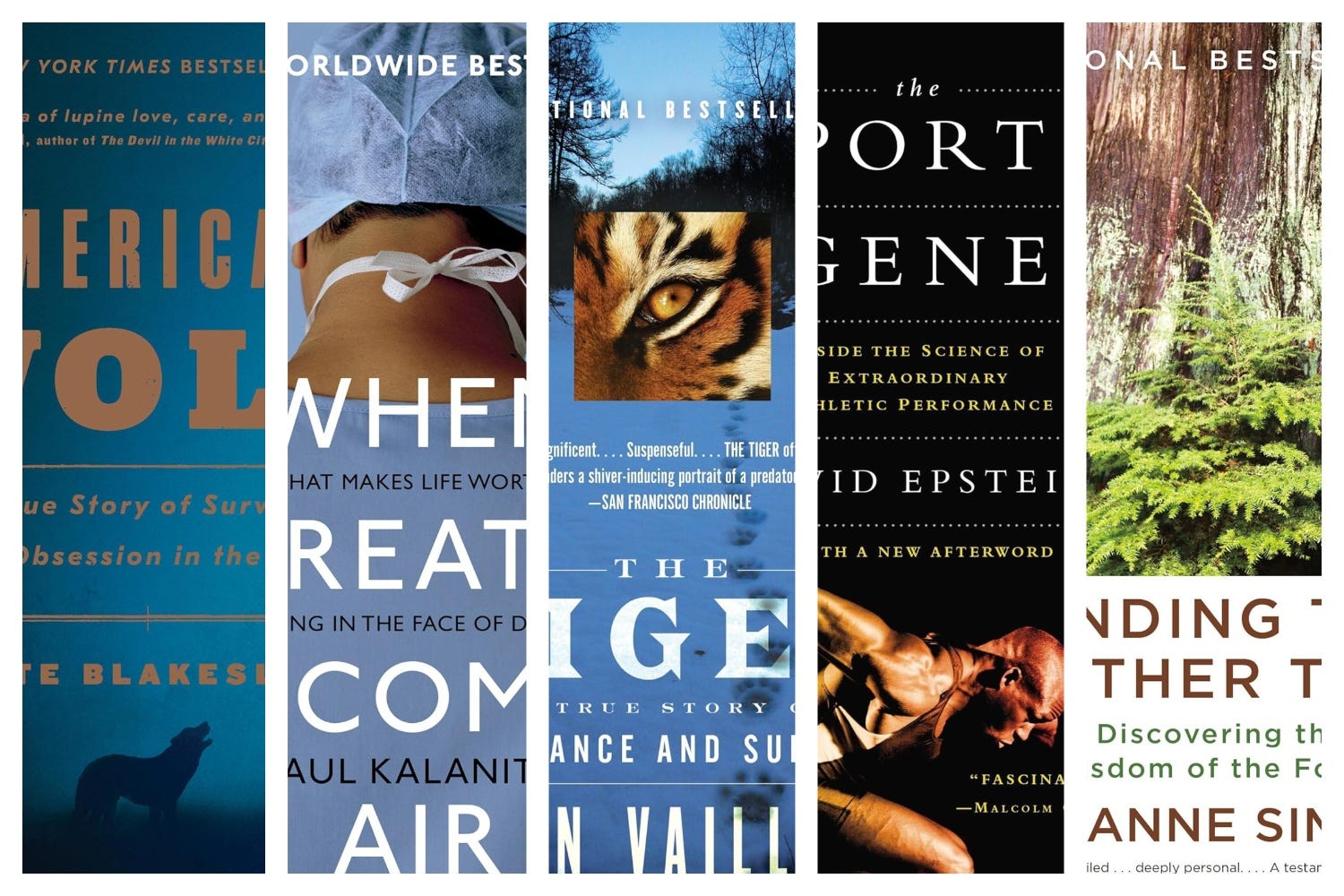
When The New York Times released its list of The 100 Best Books of the 21st Century I was surprised that more science and nature titles weren’t on it. While I was initially disappointed by that fact, soon after I resolved to put together my own list focusing on those categories. I already had a bunch of my favorite nonfiction titles written down, so I just had to refine that collection a little.
Putting my list together was a lot of fun—and included a lot of reminiscing. Admittedly, my list is biased. I’m a former wildlife biologist, and so many of the titles focus on animals—rather than say astronomy, though I do have a couple of books on space exploration. The list also tends toward nonfiction books I would have read while an editor at Outside and Smithsonian, where I worked for parts of the last two decades. And the list only includes books I have read. So titles I haven’t gotten to yet—Braiding Sweetgrass, She Has Her Mother’s Laugh, Behave—that may deserve inclusion, haven’t been considered. I feel bad about that, but I wanted to get the list done and up before the end of the year. (And before I publish another extensive books list.) Finally, I limited myself to one book per author, though I included additional titles by writers who could easily have multiple works on this list.
Mostly the list is meant to be a jumping off point. I’m offering up my favorite titles for you to consider reading. And I’m hoping you’ll suggest books I missed in the comments. Disagreements aren’t only welcome, but encouraged.
One other minor note: If you read this list in your email, no links to the books will appear. But if you read this post on the Substack site, Amazon links will appear below the write-ups. I make a very, very small amount if you click directly from those links and buy a book. But please don’t feel obliged to. And if you don’t need delivery, ideally you’ll head to your local bookstore for a title or two. I know that’s my favorite way to shop for books.
So with all that out of the way, here are my 25 favorite nonfiction science and nature books of this century.
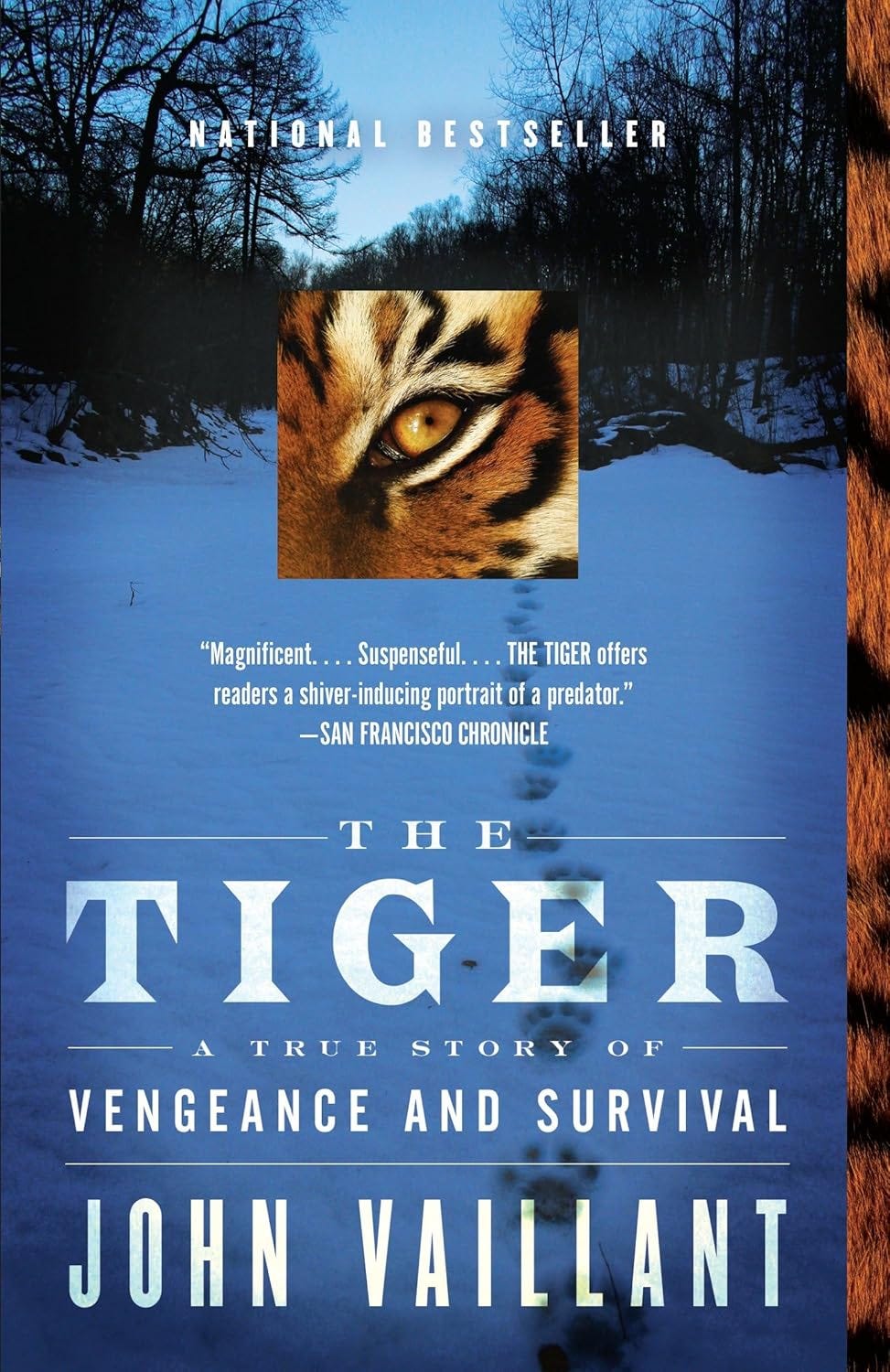
The Tiger: A True Story of Vengeance and Survival
By John Vaillant
After a tiger hunts and kills humans in the Primorye region, in Russia’s Far East, a team must track it down before it kills again. Vaillant both explores why the predator may have gone rogue and killed humans, not its usual fare, and crafts a gripping narrative about the search for the creature. When someone is looking for a suspenseful science and nature read, this is usually the first book I recommend.
Another notable book by Vaillant: Fire Weather
Why We Run: A Natural History
By Bernd Heinrich
A fascinating memoir by an accomplished ultrarunner and biologist who looks at the abilities of other animals—birds, antelopes, camels, insects—to better understand his limitations and potential. The book blew my mind when I first read it because of Heinrich’s ability to weave science with firsthand experience, making this one of the best sports science titles I’ve ever read.
The Sixth Extinction: An Unnatural History
By Elizabeth Kolbert
This Pulitzer Prize winner looks at how humans are causing the latest mass extinction of life in Earth’s history. Such previous events have been set in motion by things like asteroids hitting our planet or massive volcanic outpourings. Kolbert tags along with plant and wildlife researchers struggling to understand and fight the disappearances—frogs, corals, rhinos—happening all around us, thanks to us. Like many of her New Yorker stories, Kolbert’s book is an easy, informative, and entertaining read that is oftentimes hard to stomach.
Other notable books by Kolbert: Under a White Sky, Field Notes from a Catastrophe
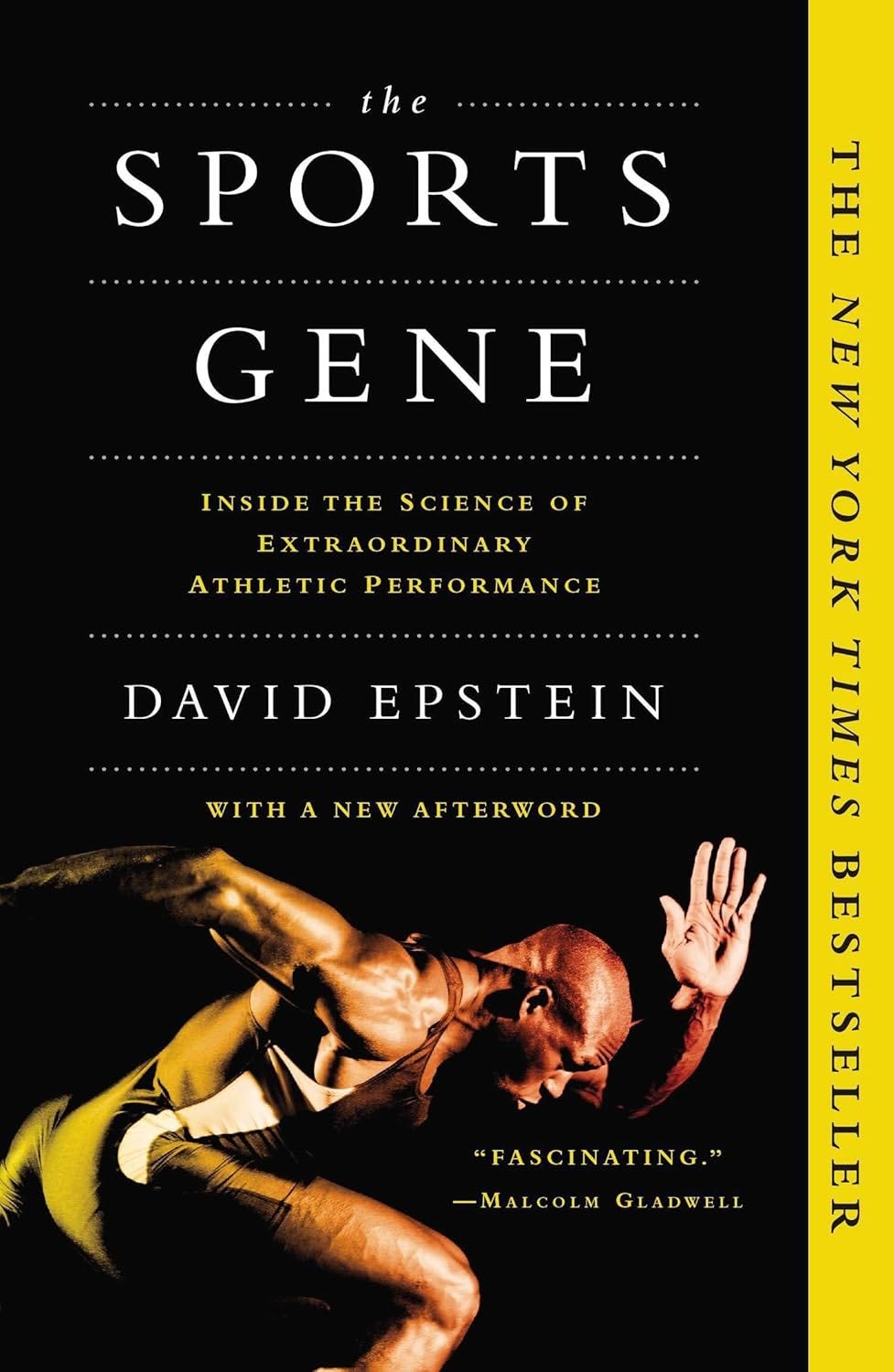
The Sports Gene: Inside the Science of Extraordinary Athletic Performance
By David Epstein
Why do professional baseball players have such trouble hitting fastpitch softball? What is one of the defining physical characteristic of pro basketball players? Why are so many Jamaicans elite sprinters? Epstein deftly answers these questions and more as he explores how much athletic success in certain sports is a result of nature or nurture. This book is on the top shelf, along with Why We Run, of the best sports science books.
Another notable book by Epstein: Range
Hidden Valley Road: Inside the Mind of an American Family
By Robert Kolker
In this book, Robert Kolker shares the most intimate details—murder, fights, sexual abuse—of the Galvins, a Colorado family with 12 children, six of whom have schizophrenia. More than just a chronicle of a family’s experiences with mental illness, the book documents the evolution of schizophrenia study and treatment in the United States. Eventually the family and genetic research into the disease meet up, and the book rises to another level.
Book of Eels: Our Enduring Fascination with the Most Mysterious Creature in the Natural World
By Patrik Svensson
This is a masterful narrative that weaves memoir with a scientific detective story. Swedish journalist Patrik Svensson shares his experiences catching European eels on adventures with his father in between detailing scientists’ efforts to uncover the secrets of the creatures—which are born in the ocean, but live in freshwater throughout Europe. As I wrote in a 2020 review for Smithsonian, “The story slips through unexpected and sometimes dark personal places, wraps itself around strange historical facts and ends with the mysterious fish revealing itself to the author in the most surprising way.”
Challenger: A True Story of Heroism and Disaster on the Edge of Space
By Adam Higginbotham
On January 28, 1986, millions watched on television as the space shuttle Challenger took off with the first teacher, Christa McAuliffe, set to go space. Soon after liftoff, the shuttle blew up and fell into the Atlantic, and replays of the disaster would run across the news for days, leaving audiences wondering what happened and why. In stunning detail, Adam Higginbotham answers those questions while telling the stories of the engineers, astronauts, and bureaucrats involved with the mission.
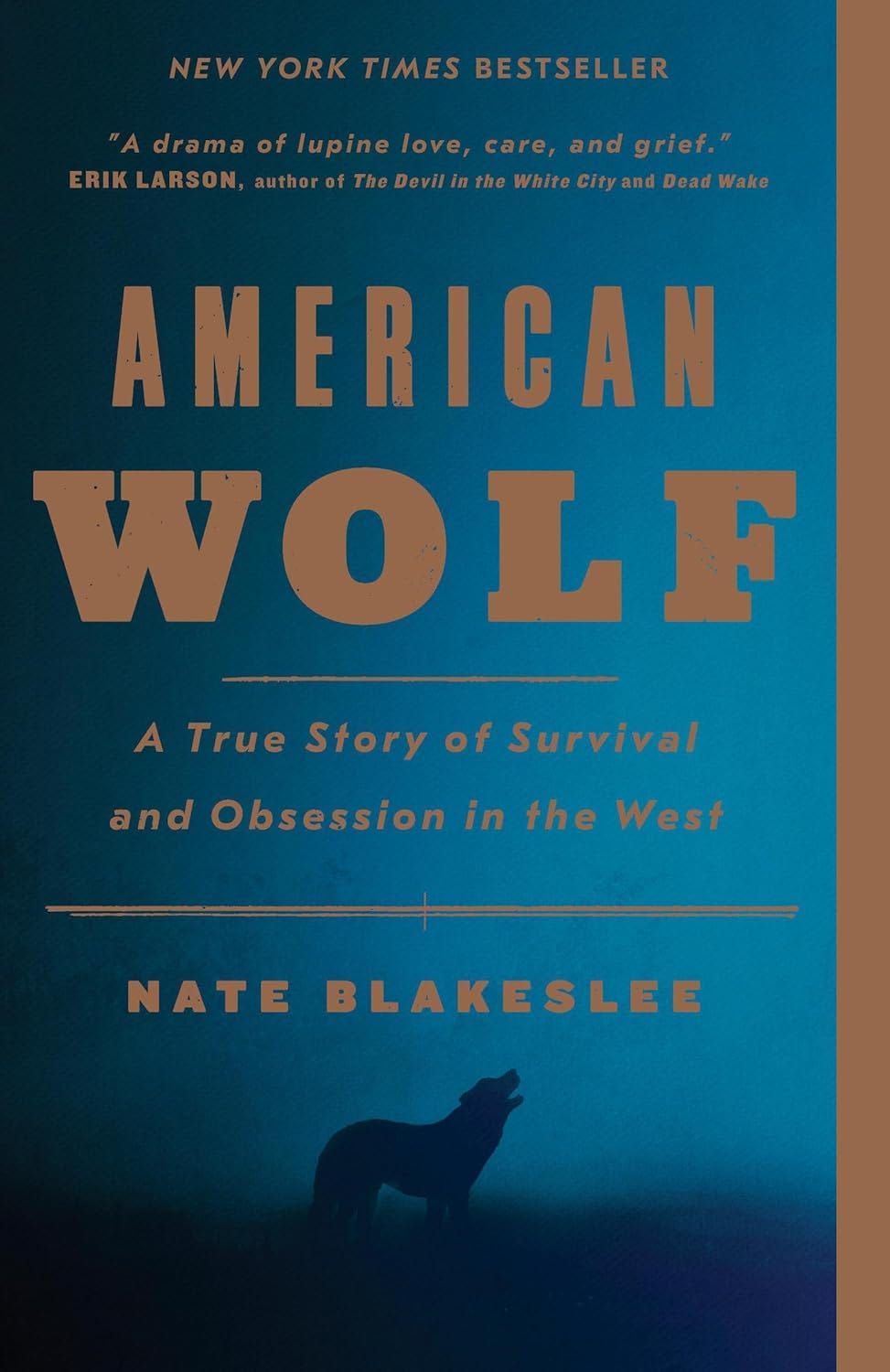
American Wolf: A True Story of Survival and Obsession in the West
By Nate Blakeslee
This is the story of O-Six, a charismatic Yellowstone wolf who attracts a crowd of fans in the American West. Among the admirers are Laurie Lyman and Rick McIntyre, two National Park Service employees who watch the alpha female as she goes about her life. As her fans document O-Six’s struggles to survive against the harsh elements, Blakeslee introduces the human factors that impact her and other wolves throughout the West, including ranching, conservation, and hunting.
Spillover: Animal Infections and the Next Human Pandemic
By David Quammen
My rule of selecting one book per author was tested most because of Quammen’s quiver. His works on things that can kill you, from large man-eating predators in Monster of God to the tiny coronavirus in Breathless, were the other prime contenders. In the end, I went with Spillover, which details the jumps of several deadly diseases—including Ebola, SARS, Hendra—from animals to humans. Quammen traveled the world to report and write the book and it is a comprehensive and thrilling look at how and why such diseases emerge. And as the author details and we’ve learned dramatically since, ripe conditions exist in our world for such jumps to continue to happen.
Other notable books by Quammen: Monster of God, Breathless
Mountains Beyond Mountains: The Quest of Dr. Paul Farmer, a Man Who Would Cure the World
By Tracy Kidder
This profile of a driven doctor who splits his time between Harvard and Haiti—among other places—opened my eyes to conditions on the island nation and other poor countries around the world. Kidder captures all sides of Dr. Paul Farmer as he hikes long distances to reach the sick, prepares speeches to raise awareness, and does whatever else he needs to do to help his patients. The writer captures Farmer with minute but important detail, including the doctor’s tendency to sometimes end sentences with the word “comma,” his polite way of calling out assholes.
Another notable book by Kidder: Rough Sleepers
Owls of the Eastern Ice: A Quest to Find and Save the World’s Largest Owl
By Jonathan C. Slaght
In Owls of the Eastern Ice, one of the best field biology books out there, Jonathan Slaght details his quest to find and understand the Blakiston’s fish owl. The author roams the wilds of Primorye, in Russia’s Far East, and listens for the bird’s low and faint call, searches for the owl’s shed feathers, watches as it hunts for fish from rivers, and talks to locals for clues about the bird, often while imbibing vodka. The story is often funny, suspenseful, and informative, but ultimately succeeds because it is an honest account of the biologist’s failures and successes.
Crossings: How Road Ecology Is Shaping the Future of Our Planet
By Ben Goldfarb
Forty million miles of roads cover our planet, and they do a lot of harm to wild creatures and, in turn, us. For example, researchers found deer factor into a million crashes annually, killing more than 200 drivers and injuring another 29,000. Ben Goldfarb drops many disturbing facts and stories throughout this book, but the work is also packed with hope. The author illustrates the successes of underpasses and overpasses throughout the world—they eliminate crashes and ensure safe animal migrations—as examples of what we can accomplish, if we want to.
The Immortal Life of Henrietta Lacks
By Rebecca Skloot
After cancer cells were taken from the cervix of Henrietta Lacks, a poor southern tobacco farmer, they were brought to a lab where they multiplied prolifically. The cells, known as HeLa, were then used to do everything from uncover the secrets of cancer to help develop the polio vaccine. The cells lived on well after Lacks’s death, though her family initially knew little about their use and didn’t profit from advancements made using HeLa. In this powerful story, Rebecca Skloot masterfully charts the burgeoning life of the cells and the often-difficult life of the Lacks family.
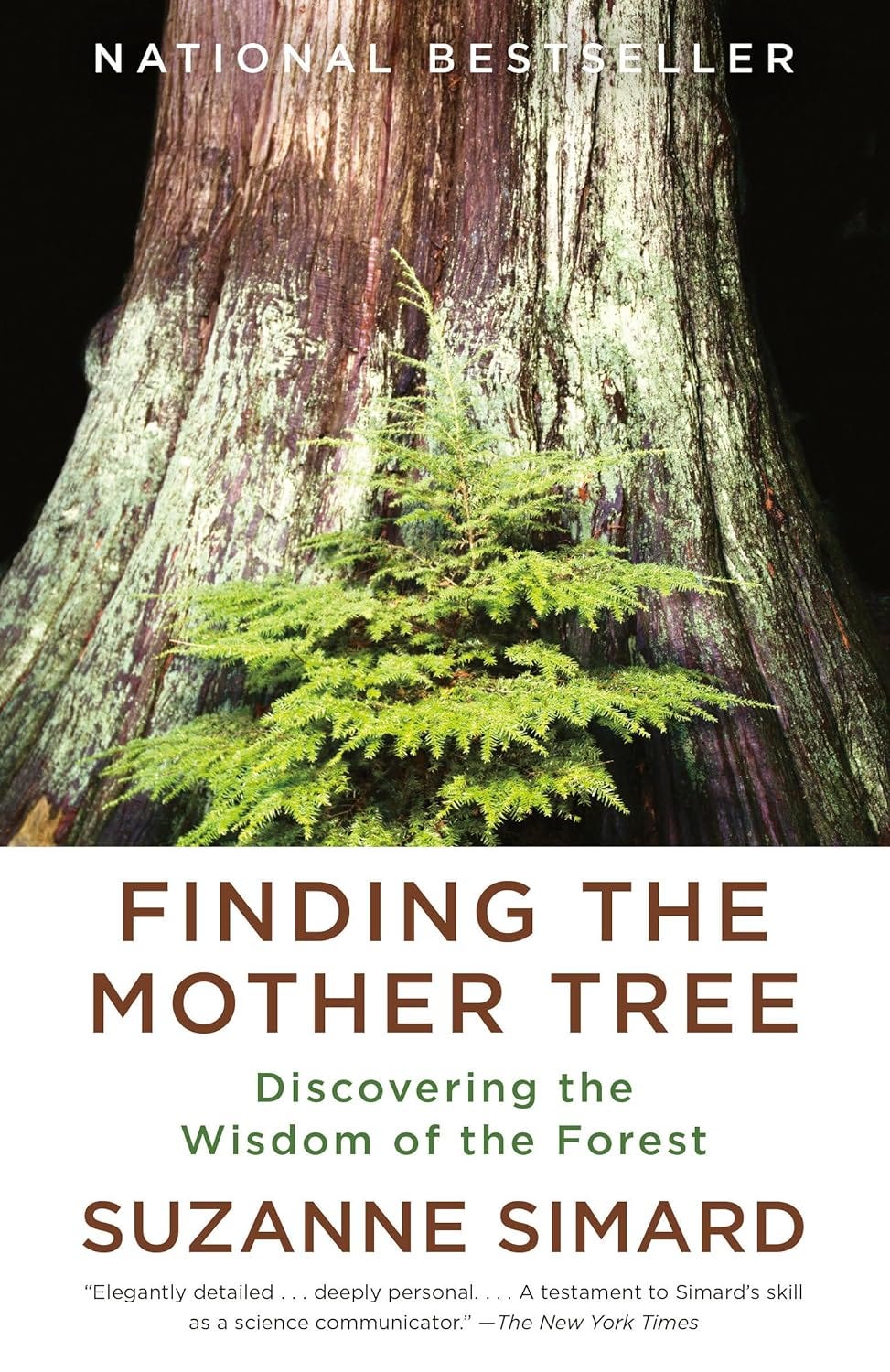
Finding the Mother Tree: Discovering the Wisdom of the Forest
By Suzanne Simard
This is the story of how a little girl who grew up in a logging family evolved into a pioneering forest ecologist who changed our understanding of the environment. Simard gains fame for helping to establish that plant roots and fungal networks exchange signals and nutrients underground, allowing both entities to thrive. The book is powerful not only because of how cleanly it explains cutting-edge science, but because Simard also shares intimate details from her personal life—marital troubles, breast cancer—as she struggles to push the limits of what we know.
The Underworld: Journeys to the Depths of the Ocean
By Susan Casey
While you can look at maps of Mars on your smart phone, more than three quarters of the ocean floor hasn’t been charted in detail. In this book, Susan Casey profiles the scientists doing that while uncovering the secrets of the abyss. And she gets to cross an item off her bucket list, by going down herself. That’s lucky for us, as she brilliantly shares what she sees while descending—such as when a researcher flashes a sub’s lights in the darkness. “All around us, the twilight zone creatures flashed back,” she writes. “It was as though we were at the center of a meteor shower, streaks and bursts and aureoles of light bejeweling the darkness to the far edges of our vision, enfolding us in a zodiac of sparks.”
https://amzn.to/40L4gZy
Another notable book by Casey: The Devil’s Teeth
The Botany of Desire: A Plant’s-Eye View of the World
By Michael Pollan
If you are looking for an entertaining and informative work on how what we eat impacts the planet, Pollan’s book The Omnivore’s Dilemma will hit the mark. I picked Pollan’s earlier book instead, The Botany of Desire, because it put him on the map and led me to think about plants in an entirely new way—not just as crops we manipulate to fit our wants, but as organisms that also take advantage of us. Pollan artfully details our relationship with the apple, the tulip, marijuana, and the potato in a book packed with aha moments.
https://amzn.to/4fflZ1j
Another notable book by Pollan: The Omnivore’s Dilemma
Hidden Figures: The American Dream and the Untold Story of the Black Mathematicians Who Helped Win the Space Race
By Margot Lee Shetterly
My mom handed me this book, and it opened my eyes to a role in space exploration I knew nothing about. Margot Lee Shetterly masterfully writes about four Black female “human computers,” or mathematicians, who used rudimentary tools to help figure out how to best launch astronauts into space. Such women overcame numerous obstacles and injustices, from World War II to the Cold War, as they empowered the United States to successfully conduct space exploration.
The Wild Trees: A Story of Passion and Daring
By Richard Preston
What goes on at the tops of the tallest trees in the world? An awful lot, as is revealed in Richard Preston’s book about the scientists who climb into the canopies of California’s redwoods on a quest of discovery. Aside from the many animals that inhabit the trees’ upper branches, soil accumulates high up and plants including huckleberries and Sitka spruce can sprout and grow. As Preston writes, the varied environment is like a coral reef in the air, and the crew of researchers who study it are an equally diverse group.
The Worst Hard Time: The Story of Those Who Survived the Great American Dust Bowl
By Timothy Egan
In the early 2000s, partially to prep for grad school, I took an environmental science class at DePaul. That was the first time I heard a professor say that the Dust Bowl was the greatest environmental disaster of the 20th century. Farmers who migrated to the Plains tore up native plants and plowed fields for crops, leaving topsoil to be blown in great black clouds over the land. In vivid detail, The Worst Hard Time tells the stories of families that lived through the massive dirt blizzards as farming in the region collapsed, and individuals struggled against poverty, sickness, and death. The intimate historical accounts are gripping, and one of the big reasons Egan’s work won The National Book Award in 2006.
Bonk: The Curious Coupling of Science and Sex
By Mary Roach
No other science writer has a voice like Mary Roach. She takes the weird, the creepy, the untalked about subjects and explores their deepest reaches in detail, always keeping her eye out for the hilarious. Any of her books could have made this list, but I picked Bonk because it’s the funnest of the bunch. Roach interviews scientists with a certain bravery, asking the questions about sex and genitals others might let slide, romping her way through a taboo topic while playfully bringing readers along for the ride.
Other notable books by Roach: Fuzz, Stiff
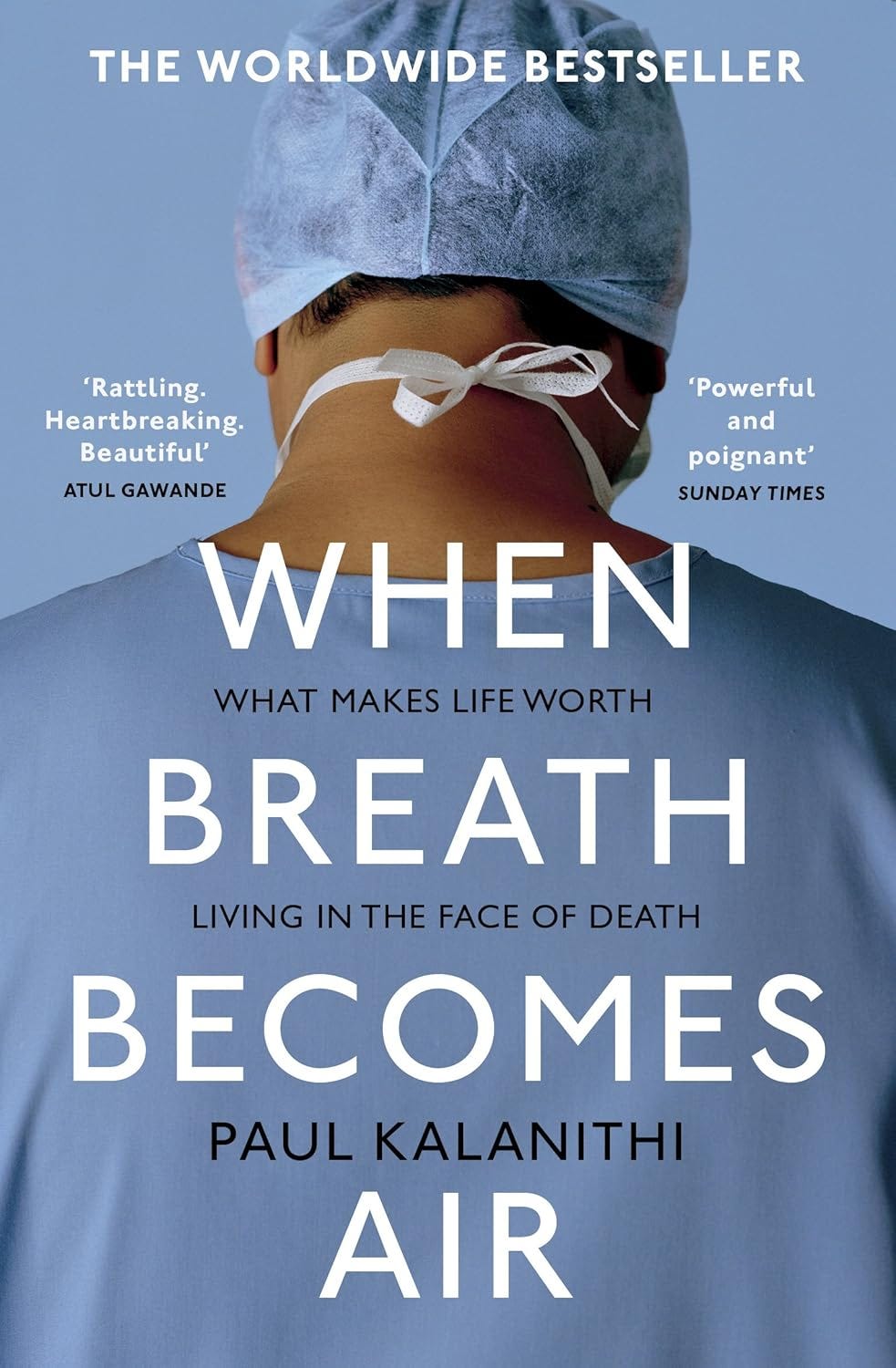
When Breath Becomes Air
By Paul Kalanithi
My sister Margaret, an occupational therapist, gave me this memoir by a neurosurgeon who is diagnosed with stage IV lung cancer. The book is not only an account of Paul Kalanithi’s life, but also a kind of letter from him on how he deals with certain death. Kalanithi died at 37, shortly after he and his wife have a daughter. When I first wrote about the book in my journal in 2017, I was struck by how honest the doctor was. The writing is clean and simple, and nothing seems exaggerated, which allows for a kind of easy read on an incredibly difficult reality, one that ends with a direct and powerful message.
The Death and Life of the Great Lakes
By Dan Egan
A chunk of my early 20s was spent living along Lake Michigan, in Milwaukee and Chicago, so I had a little bit of knowledge about the Great Lakes and why they are important. The five lakes hold about a fifth of the world’s fresh water supply, are vital fish habitat, and offer numerous recreational opportunities. But I learned loads more about their value in Dan Egan’s addictive account of how we’ve impacted the waterways—by altering transportation to the lakes, introducing invasive fish and mussels, and sparking enormous algal blooms. This book is one of the best deep dives into just how much we can alter our surrounding natural environment.
The Emperor of All Maladies: A Biography of Cancer
By Siddhartha Mukherjee
If you have any questions about how our understanding of cancer has evolved, this book is the most likely work to have answers. Siddhartha Mukherjee combines his own experiences working as a doctor with the dense, illuminating history of a disease that causes nearly ten million deaths a year. Aside from being packed with information that details what we have learned about the disease, the book is loaded with haunting moments. One that stays with me? The story of the “Radium girls”—young women who used radium-infused paint, a carcinogen that glowed in the dark at night, to decorate watches. To produce sharp lettering on the timepieces, the women were encouraged to lick their paint brushes with their tongues. As the years passed, several of these women developed leukemia and other cancers, and some sued U.S. Radium, but many died soon after the case was settled.
An Immense World: How Animal Senses Reveal the Hidden Realms Around Us
By Ed Yong
How does a turtle experience the world? A bat? An insect? Ed Yong vividly describes how the senses of other species work in this revealing book. Since he started his blog, Not Exactly Rocket Science in August 2006, Yong has reported on the amazing abilities of other animals, a subject he continued to write about from 2015 on at The Atlantic (where he also won a Pulitzer Prize for his writing on Covid-19). Yong’s writing on Earth’s many creatures often inspires awe, and this book is no exception, being packed with explanations of abilities that will leave you thinking, “Oh wow.”
Fire in the Turtle House: The Green Sea Turtle and the Fate of the Ocean
By Osha Gray Davidson
If you read dozens of other lists like this, you might never come across this book. The work is an excellent environmental detective story, but I picked it partially for personal reasons. Osha Gray Davidson profiles the scientists seeking to understand and stop a deadly tumor-causing disease affecting green sea turtles. One of the researchers featured became my boss in Hawaii. A couple of years after working as a wildlife biologist for him, I went to grad school and completed a master’s thesis examining how the disease was impacting nesting turtles on a remote Pacific Island. The book offered not only a solid and engaging history of the disease, but a compelling story that inspired me and others to learn more about the affliction.
What about you? What’s your favorite science and nature book of the last 25 years?
And if you know anyone else who might like the Field and Lab newsletter, please share it.
Thanks for reading,
Joe
As an Amazon Associate I earn from qualifying purchases.
I have four of these books in my library and haven’t read them yet. Your précis have nudged me into giving them a try. Thanks!
Fabulous want to read them all!